Subtotal: $1,200.00

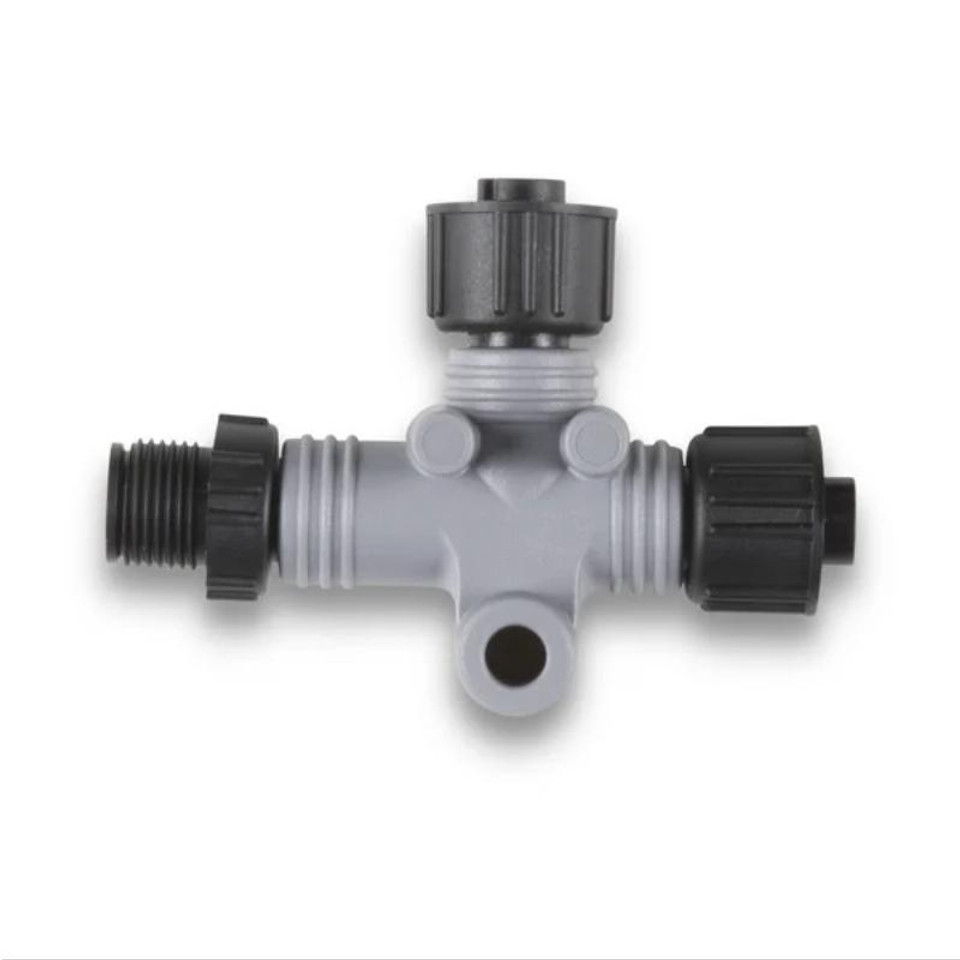
Garmin NMEA 2000 T-connector
Add components to your NMEA 2000 network by installing our T-connector on your backbone cable. The revised version of this T-connector is offset by 45 degrees compared to the previous version.
| Weight | 0.1 kg |
|---|
You may also like…
-
-
Garmin, Garmin Accessories
Garmin NMEA 2000 Terminator – Female
Garmin NMEA 2000 Terminator – Female
This standard male or female NMEA 2000 light cable connector provides termination resistance for one end of the backbone of the network. Each male or female connector sold separately.
SKU: 010-11081-00
Related products
-
Garmin, Garmin Accessories, Garmin Radars, Radars
Garmin Marine Heading Sensor for Radar (Part No. 010-11417-00)
 Garmin, Garmin Accessories, Garmin Radars, Radars
Garmin Marine Heading Sensor for Radar (Part No. 010-11417-00)
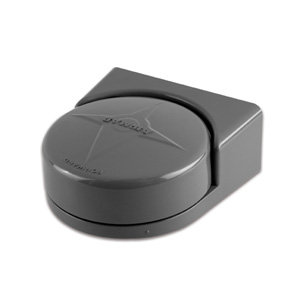
Garmin Marine Heading Sensor for Radar [Garmin Part Number: 010-11417-00] – RRP $1200
When interfacing this 3-axis compass heading sensor to our marine lineup of MFDs and radars, mariners can expect unparalleled radar overlay performance and accuracy along with excellent MARPA capabilities.
This heading sensor (based on Airmar H2183) uses a rate gyro, so it can maintain an exceptional 2 degree heading accuracy under heavy dynamic conditions, with up to 30 degrees of pitch and roll. In addition, it supports either NMEA 0183 or NMEA 2000® data output to fit any installation.
Installation is a snap thanks to the heading sensor’s innovative design, allowing it to mount to any angled bulkhead. Mariners can expect this heading sensor to provide trouble-free service in the harshest conditions and will learn to appreciate its reliability and excellent performance.
* Note: NMEA 0183 and NMEA 2000 cables sold separately (to connect to a NMEA 2000 Network a dedicated NMEA 2000 Marine Heading Sensor Cable is required Garmin Part Number: 010-11419-00 – optional, please see related products).
THIS IS SUITABLE FOR CURRENT MODEL GARMIN GMR 18 xHD RADOME & GMR 24 xHD RADOME.
FEATURES:
* Better than 1 degree static heading accuracy
* Industry leading 2 degree dynamic accuracy up to 30 degree pitch and roll
* Three-axis solid-state compass provides accurate heading data
* Three-axis accelerometer improves heading, pitch and roll in static conditions
* Three-axis rate gyro improves heading, pitch and roll in dynamic conditions
* Temperature compensated across the entire operating range to ensure optimum accuracy
* Easy installation to any angled bulkhead
* Auto-calibration featureSPECIFICATIONS:
* Dimensions (HxLxD): 2″ (5.08 cm) x 4.4″ (11.18 cm) x 4.5″ (11.43 cm)
* Default heading output: 10 Hz for both NMEA 0183 and NMEA 2000 (NMEA 2000 can be output up to 20 Hz)
* Waterproof housing: IPX6
* Operating voltage: 9 VDC to 16 VDCWHAT’S IN THE BOX:
* Garmin Marine Heading Sensor
* DocumentationWARRANTY:
We are an authorised Australian Garmin retailer, as such Full Australian Manufacturers Warranty is applicable for this item. Please note if a Garmin unit is purchased overseas or from a non-authorised Garmin retailer you may not receive warranty coverage in Australia.*Specifications from suppliers’ information.
SKU: 010-11417-00 -
Garmin, Garmin Radars, Marine Electronics, Sanctuary Cove
Garmin Dome Radar GMR Fantom 18x – 50W 18″ White
-6% Garmin, Garmin Radars, Marine Electronics, Sanctuary Cove
Garmin Dome Radar GMR Fantom 18x – 50W 18″ White
Garmin Dome Radar GMR Fantom 18x – 50W 18″ White – STRIKINGLY POWERFUL RADAR
These incredibly powerful 18″ and 24″ dome radars have beauty and brains with a black colour option and 50 watts of output power.

GMR Fantom brings the power. Fifty watts of it, actually.

See targets clearly, and adjust their sizes as needed.

With power save mode, you get to choose when to use full power and when to pull back.

Every second of power usage counts. Cut back even more by choosing your active times down to the second.

MotionScope™ technology shows targets in colour as they move toward you or away.
SKU: 010-02584-00 -
Lowrance, Lowrance Sonar & Transducers
Xsonic Airmar P66 Transducer
Airmar P66 Multisensor/CW Transom Mount
The Airmar P66 Multisensor is a 600W transducer that combines depth and temperature functions in one housing. And it features our 50/200 kHz, dual-frequency, ceramic element. This hydrodynamic housing with its rounded nose reduces the turbulence under the transducer’s acoustic face for clear display images. It is Airmar’s best transom mount for boats up to 8 m (25′) long.
Best of a New Generation! The Airmar P66 is the best performing and most popular, transom-mount, TRIDUCER® Multisensor in the market for many reasons. Foremost, the 50 kHz and 200 kHz, oversized, ceramic element produces focused beams, highlighting detail in the water column and in the bottom structure.
Features
- Depth, and fast-response water-temperature sensing
- 600 W of power
- Dual-frequency element:
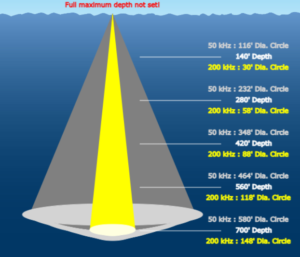
- 50 kHz with a 45° beamwidth for depth performance to 353 m (1200′)
- 200 kHz with a 12° beamwidth for depth performance to 206 m (700′)
- Recessed water-flow channel protects paddlewheel from obstructions
- Plastic release bracket protects sensor from frontal impact
- Sensor can be removed from bracket without tools for easy service or storage
- Chemical and impact-resistant plastic housing
Options
- Smart™ Sensor version (P66S) featuring embedded microelectronics
Traditional Frequency Transducers
Traditional frequency transducers continue to be popular choices for angler’s who like the simplicity of fewer frequencies or have a non-Chirp capable sounder. Our Traditional (CW) models range in power from 300 watts to 1kW and typically are either 200 kHz, 50 KHz or a combination of the two. Built with the highest quality construction, Airmar traditional frequency transducers will allow your fishfinder to deliver excellent deep-water performance, great bottom structure detail, and fish targets.
Benefits of Transom Mount Transducers
Transom models are best suited for small and trailered vessels where a thru-hull installation is not practical. Perfect for freshwater boat styles and centre consoles. Simple to install and ideal for small trailered vessels where a thru-hull may interfere with loading.
• Simple installation on the transom of the boat
• Great performance at boat speeds below 30 knots
• Easy maintenance and low-cost replacementWhy does Frequency Matter?
Selecting the best frequency for your specific application is very important. The good news is that once you know what frequency will work best for the type of fishing you do, there’s an AIRMAR transducer designed to maximize the performance of your sounder.
AIRMAR Chirp transducers are available in various frequency combinations:Dual Band: - Low/High (LH)
- Low/Medium (LM)
- Low/High Wide (LHW)
- Low Wide/Medium (LWM)
Single Band: - Low
- Medium
- High
- HighWide
Low Frequency = Greater Depth (ex. 42-65 kHz)
• Sound waves will not present as clear a picture of the bottom on the display but will sound down in very deep areas where high-frequency sound waves cannot reach
• Provides greater depth range, wider beamwidth, and ultimately more coverage under the boat
• Chirp signal processing technology used with AIRMAR broadband, Chirp-ready transducers provide more detail at greater depths and are less susceptible to noise
• Great for operating at high boat speedsHigh Frequency = Greater Detail (ex. 130-210 kHz)
• More sensitive to small targets and will send back detailed information which will display as crisp, high-resolution images on the echosounder screen
• Best for shallower water and is popular with anglers fishing at depths less than 1500 feetMedium Frequency = The Best of Both Worlds (ex. 80-130 kHz)
• Provides the ability to sound deeper than the high frequency, along with better resolution than the low frequency
• Wider beam than the high frequency, achieving more coverage under the boat and greater opportunity to find fish
• Clear images at higher boat speedsBrochure
SKU: 000-13977-001, 000-13919-001 -
Garmin, Garmin Fishfinder, Sanctuary Cove
Garmin STRIKER Vivid 7sv with GT52HW-TM Transducer
Garmin STRIKER Vivid 7sv With GT52HW-TM Transducer – THE CHOICE IS YOURS
See fish and structure in maximum detail when you pick your display colour, your location and your sonar for your day on the water with the STRIKER Vivid 7sv fishfinder with transducer.

The sonar colour you pick says a lot about your fishing style. Good thing there are 7 new vivid options.

What a view. Use the included transducer to get CHIRP traditional and ClearVü sonars.

Never lose a hot spot again. Use waypoint marking to find your way back.

What’s under the water’s surface looks pretty good as 1-foot contours, just saying.

Wi-Fi® connection1 on land opens up a world of possibilities on the water.
SKU: 010-02553-01