



Understand Your Boating Needs and Budget
Before you start inspecting vessels, take time to work out a boat buying checklist. Knowing your primary use, whether it’s fishing, family cruising, or watersports, will guide every decision. Set a realistic budget that includes not just the purchase price but also ongoing costs such as insurance, maintenance, cleaning, berthing, and servicing. First-time buyers are often advised to start small, go with outboards, choosing a boat that matches their skill level and lifestyle. A smaller, manageable boat lets you learn the ropes without overwhelming costs or complexity.
The Six Key Areas for a Boat Buying Checklist
A thorough boat inspection checklist should cover these six major components: Engine, Electrics, Hull, Trailer, Seating/Covers/Upholstery, and Paperwork. Each area reveals important information about the boat’s condition and history.
Engine
The engine is one of the most critical parts of any boat. Check that it starts easily, runs smoothly at idle, and accelerates without hesitation. Look for excessive smoke, corrosion on components, and signs of oil or fuel leaks. Ask for the service history and total engine hours. The seller should confirm that the motor is included in the sale and that it has been regularly maintained. If possible, have a qualified mechanic inspect the engine before committing to the purchase. Is the engine still under warranty? Yamaha outboards can include six years of warranty. This could give you a lot of peace-of-mind.
Electrics
Electrical systems can fail without warning, so a careful check is essential. Test all navigation lights, bilge pumps, radios, and any onboard electronics. Examine the batteries for age, corrosion, and secure mounting. Look at wiring for frayed cables, loose connections, or signs of previous repairs. A well-maintained electrical system is a good indicator that the boat has been looked after overall.
Hull
The hull is the boat’s foundation. Inspect it thoroughly for cracks, blisters, stress marks, and any signs of osmosis, a condition where water seeps into the fibreglass. Check the keel, chines, and transom for damage. Ask how the boat has been stored; on a trailer, under cover or in the water. If the boat has been previously repaired, ask for details and receipts. A marine surveyor can provide a professional assessment, particularly if the boat is older or has been in salt water for extended periods.
Trailer
For trailerable boats, the trailer is as important as the boat itself. Examine the trailer’s frame for rust or cracks. Check the condition of tyres, bearings, lights, and brakes. Look at the safety chains and coupling mechanism. A faulty trailer can be dangerous on the road and expensive to replace. Consider the trailer’s compliance with Australian design standards, and ask when the bearings were last serviced.
Seating, Covers and Upholstery
The interior condition affects both comfort and resale value. Check seats for tears, fading, or mould. Examine canvas covers, bimini tops, and enclosures for wear and waterproofing. Upholstery that is sagging or stained may need replacement. While cosmetic issues are not deal-breakers, they can add significant cost if you want to restore the boat to a high standard.
Paperwork
Gathering the correct documentation is essential to ensure a clean transfer of ownership. A receipt should include date, full names and addresses, deposit amount, final purchase amount, location, signatures, and agreed terms. Verify the boat’s registration with your state transport authority. Check the Personal Property Securities Register for any outstanding finance or ownership disputes. Review insurance documents, warranty (if applicable), and safety certificates. A PPSR check is a simple way to confirm the seller has clear title to sell the boat.
Legal and Financial Checks
Unlike cars, boats do not have a roadworthy certificate. That makes legal and financial checks even more important. Confirm that the boat’s registration is current and that there are no fines or restrictions attached to it. Some insurers require an out-of-water marine survey if the boat is over five to ten years old before they will provide cover. It is wise to arrange a survey as well as a PPSR search before you hand over any money.
Questions to Ask the Seller
A few direct questions can reveal a lot about a boat’s history. Ask why they are selling, how many owners it has had, and how often it was used. Enquire about storage, was it kept under cover or in the water? Find out if there have been any major repairs or modifications. Ask whether the warranty (if any) is transferable, and whether a marine surveyor can inspect the boat before purchase. Honest sellers will welcome these questions; evasiveness is a red flag.
Extra Costs of Boat Ownership
Owning a boat involves more than the purchase price. Ongoing costs include insurance, maintenance, cleaning, berthing or storage fees, and regular servicing. A general guideline is that boats depreciate by around 15 per cent annually, although this can vary depending on brand, condition, and market demand. Factor these costs into your budget so that you can enjoy your boat without financial stress.
Final Tips for First-Time Buyers
If you are buying your first boat, seek help from experienced boaters or a trusted marine dealer. Test the engine on the water if possible, and inspect the hull and trailer thoroughly. Understand the safety gear requirements that apply in your state, requirements differ for different boat sizes and locations. Also, do not forget to test the overall setup: make sure the boat sits level on the trailer and that all systems function as they should. Taking your time now will pay off once you are on the water.
Frequently Asked Questions
Do I need a marine survey before buying a used boat?
A marine survey is not legally required, but it is strongly recommended for any boat over five to ten years old. Some insurers will require an out-of-water survey before providing cover. A qualified surveyor can identify hidden issues that an untrained eye might miss, giving you peace of mind and negotiating power.
What is a Certified Used Boat?
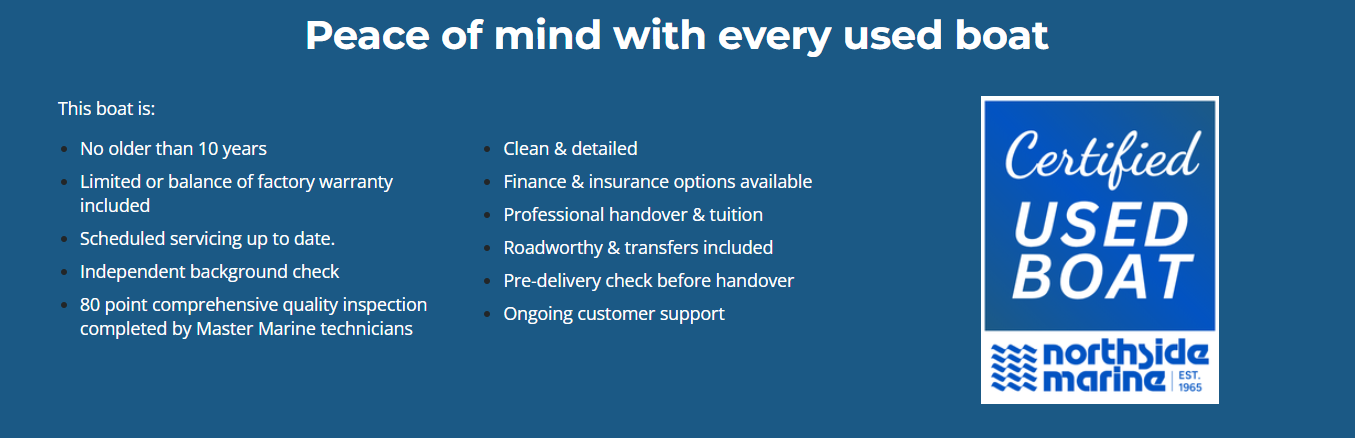
A certified used boat is a guarantee from Northside Marine that the vessel you are looking at is safe, clean and gives you peace of mind with your purchase. The certified used boat gives you:
- Scheduled servicing up to date.
- Independent background check
- 80 point comprehensive quality inspection completed by Master Marine technicians
- Clean & detailed
- Finance & insurance options available
- Professional handover & tuition
- Roadworthy & transfers included
- Pre-delivery check before handover
- Ongoing customer support
What is a PPSR check and why is it important?
The Personal Property Securities Register holds records of any financial interests registered against a boat. A PPSR check reveals whether money is still owed on the vessel or if there is a dispute over ownership. Running this check before buying protects you from unknowingly taking on someone else’s debt or legal problem.
What safety equipment must I have on my boat?
Safety equipment requirements vary by state and boat size. Typical items include life jackets, a fire extinguisher, distress signals, an anchor and line, and a bailer or pump. Check the official website of your state’s maritime authority for the exact list that applies to your vessel.
How can I estimate ongoing costs for a boat?
Ongoing costs include insurance, regular servicing, maintenance, cleaning products, and either berthing or trailer storage. A common rule of thumb is to budget around 10 to 15 per cent of the boat’s value per year for upkeep. Depreciation can add another layer, with many boats losing about 15 per cent of their value annually in the early years.
Should I buy a new or used boat as a first-timer?
Starting with a used boat can be a smart way to learn the ropes without a large financial commitment. A smaller, older boat lets you gain experience and figure out what you really want. However, a new boat comes with a full warranty and modern features. Whichever you choose, use a thorough boat buying checklist to make an informed decision.